Transitioning into a quote seamlessly can elevate the impact of your writing. Start by introducing the quote organically within your sentence.
Avoid abrupt shifts by providing context or a lead-in to the quote.
Ensure the quote flows naturally within the narrative, enhancing your message.
By mastering how to transition into a quote, you can effectively integrate external perspectives into your own writing.

How to Transition Into a Quote
Welcome to our comprehensive guide on how to transition into a quote! Quotes are a fantastic way to enhance your writing and add credibility to your ideas. However, seamlessly incorporating quotes into your writing can be a bit tricky. In this article, we will break down the process step by step and provide you with practical tips and examples to help you master the art of transitioning into a quote.
Understanding the Importance of Quotes
Before we delve into the nitty-gritty of transitioning into a quote, let’s first understand why quotes are essential in writing. Quotes serve several purposes:
Add Credibility:
When you include quotes from experts or reputable sources in your writing, it adds credibility and authority to your arguments. Quotes from well-known individuals or studies can strengthen your points and make your writing more persuasive.
Provide Evidence:
Quotes can serve as evidence to support your claims. Whether you are writing an essay, a research paper, or a blog post, backing up your arguments with quotes can make your writing more convincing and reliable.
Engage Readers:
Well-chosen quotes can capture the attention of your readers and make your writing more engaging. They can break the monotony of long blocks of text and provide a fresh perspective on the topic you are discussing.
Types of Quotes
Before you learn how to transition into a quote, it’s essential to be familiar with the different types of quotes you can use in your writing:
Direct Quotes:
A direct quote is when you replicate the exact words spoken or written by someone else. Direct quotes are enclosed in quotation marks and attributed to the original source.
Paraphrased Quotes:
A paraphrased quote is when you rephrase someone else’s words in your own writing. While paraphrased quotes do not require quotation marks, it is crucial to cite the original source to avoid plagiarism.
Block Quotes:
Block quotes are used for long quotes that span multiple lines. Block quotes are typically indented and do not require quotation marks.
Steps to Transition Into a Quote
Now that we have covered the basics let’s move on to the essential steps on how to transition into a quote seamlessly:
Step 1: Introduce the Quote
Before inserting a quote into your writing, provide some context to prepare your readers for the incoming quotation. Introduce the quote with a brief explanation of who the author is or the significance of the quote.
Step 2: Use Signal Phrases
Signal phrases are phrases that lead into a quote and provide information about its source. Signal phrases can include verbs like “says,” “writes,” “argues,” “states,” etc. These phrases help smoothly transition from your writing to the quoted material.
Step 3: Punctuate Correctly
When integrating a quote into your writing, ensure that you punctuate it correctly. Place commas and periods inside the closing quotation marks. If the quote ends with a question mark or exclamation point, place them inside the quotation marks if they are part of the original quote, outside if they are not.
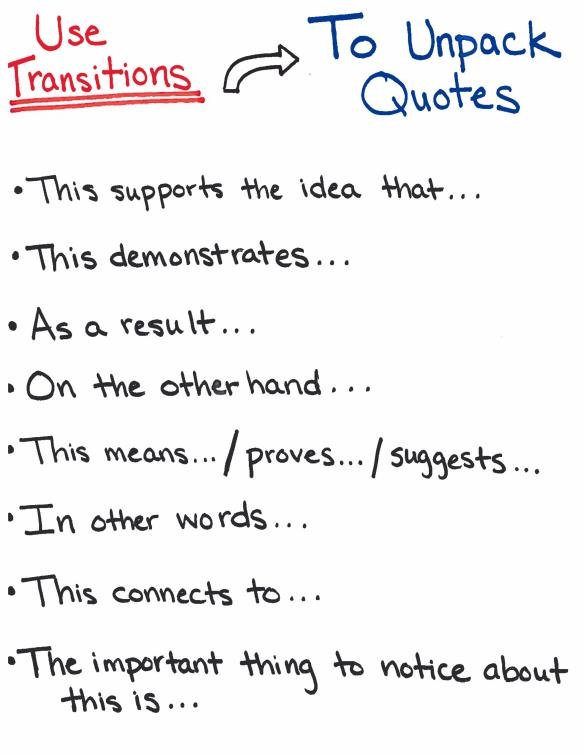
Step 4: Analyze and Interpret
After presenting the quote, analyze and interpret its significance in relation to your writing. Explain how the quote supports your argument, enriches your content, or provides a different perspective on the topic.
Examples of Transitioning Into Quotes
Let’s look at some examples to better understand how to transition into quotes effectively:
Example 1:
Introducing the quote: As Maya Angelou once said, “I’ve learned that people will forget what you said, people will forget what you did, but people will never forget how you made them feel.”
Analysis: This quote highlights the importance of emotional impact in interpersonal relationships and serves as a reminder to focus on how we make others feel.
Example 2:
Introducing the quote: In his seminal work, “To Kill a Mockingbird,” Harper Lee writes, “You never really understand a person until you consider things from his point of view… Until you climb inside of his skin and walk around in it.”
Analysis: This quote emphasizes the value of empathy and understanding others’ perspectives—a crucial lesson in fostering compassion and tolerance.
Practical Tips for Using Quotes
Here are some practical tips to keep in mind when incorporating quotes into your writing:
Tip 1: Select Quotes Wisely
Choose quotes that are relevant to your topic and add value to your writing. Avoid using quotes just for the sake of it; ensure they enhance your argument or provide additional insight.
Tip 2: Cite Your Sources
Always credit the original source of the quote to avoid plagiarism. Use proper citation styles such as APA, MLA, or Chicago to acknowledge the authors and texts you quote.
Tip 3: Blend Quotes Seamlessly
Integrate quotes smoothly into your writing by transitioning into them effectively. Avoid abrupt shifts between your words and the quoted material to maintain cohesion and flow.
Mastering the art of transitioning into a quote can elevate the quality of your writing and make your arguments more persuasive. By following the steps outlined in this guide and practicing incorporating quotes into your writing, you can effectively use quotes to enhance your content and engage your readers. Remember to choose quotes thoughtfully, introduce them seamlessly, and analyze their relevance to make your writing more impactful. Happy quoting!
How to Quote in Under 5 minutes | Scribbr 🎓
Frequently Asked Questions
How can I effectively transition into a quote in my writing?
To seamlessly transition into a quote, it is essential to provide some context or introduce the quote by briefly summarizing the point you are making. This helps set the stage for the quote and allows readers to understand its relevance. You can also use phrases like “As stated by,” “In the words of,” or “According to” to smoothly lead into the quote.
What is the best way to integrate a quote into my text?
When integrating a quote into your text, make sure to blend it naturally within your own writing. Avoid dropping quotes abruptly – provide some explanation or analysis after the quote to show its significance and how it ties back to your argument. Additionally, remember to properly cite the source of the quote to give credit to the original author.
How can I make sure the quote flows smoothly within my writing?
To ensure that the quote flows smoothly within your writing, pay attention to the grammatical structure and punctuation. If needed, you can modify the quote slightly to fit the syntax of your sentence while maintaining the original meaning. Use transitions or signal phrases to connect the quote to your own words and create a cohesive narrative.
Final Thoughts
Transitioning into a quote can elevate your writing by adding depth and credibility. Remember to introduce the quote seamlessly within your sentence structure. By incorporating quotes effectively, you can enhance your argument and engage readers. Adding relevant quotes can provide different perspectives and strengthen your ideas. Mastering the art of transitioning into a quote takes practice and attention to detail. Start by analyzing your content and identifying where a quote would best support your message. Strengthen your writing by mastering this essential skill.