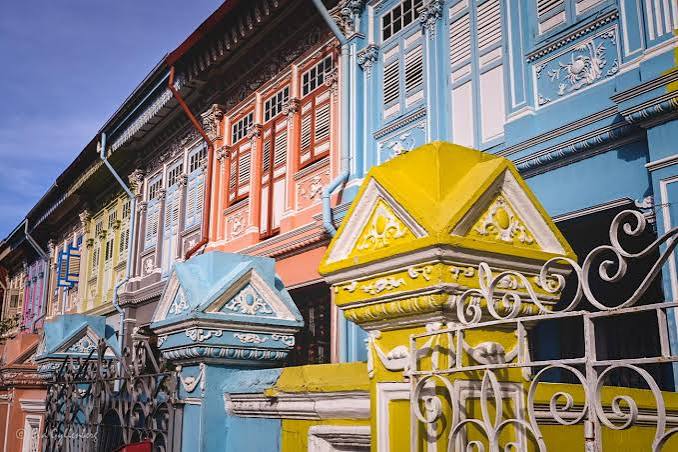
Singapore can be explored in just a matter of days. Marina Bay skyline, Chinatown and Gardens by the Bay draw attention. It can be, however, challenging to discover the hidden gems of Singapore’s quieter side. Joo Chiat and Katong are incredibly fascinating destinations. The Peranakan community of Singapore, which features Chinese and Malay cultures, used to live in the area. That is why it was one of the first places nominated as a Heritage Town.
I spent two days there on foot. I started the mornings exploring the streets. I followed the shophouses, stores, and small museums.
Starting the walk in Singapore’s Joo Chiat
I began early on a Saturday, after a flight the day before in the business flights cabin. The extra space, priority services, and complimentary meals helped me rest, and I was ready for a long walk. Marine Parade Station puts you near the southern end of Joo Chiat Road, and I worked my way north from there.
On this street, the shophouses were side by side. The two- and three-story buildings with the covered five-foot path offer excellent shade that makes walking comfortable in Singapore’s humid weather conditions. The eye-catching details can be found on doors and shutters.
Koon Seng Road in Singapore’s Katong
Koon Seng Road is the most photographed street in the district, and it deserves the attention. The pre-war terrace houses are painted in pastel pinks, greens and blues, with ornate tiles and carved wooden doors. Residents still live in many of them, so keep your voice low and stay outside.
Visit in the morning. The lighting is soft, and colours appear rich. At noon, however, everything is flat due to the intensity of the sun. I spent a fair amount of time standing at the end of the row counting all the various tile patterns.
Singapore Museums and workshops in Joo Chiat
The Intan at Joo Chiat Terrace is a museum located in a conserved shophouse. The owner, who is a collector, conducts all tours, and the museum is filled with various pieces of porcelain, furniture, and embroidered textiles. It is a small place, so a reservation is important.
Katong Antique House is on East Coast Road and has a diverse setting. The owner comes from a Peranakan family and takes tourists around the museum, where you can learn the history of similar items.
Beads, tiles and slippers in Singapore’s Katong
At Rumah Bebe, I found the clearest example of Peranakan craft. The shop sells hand-beaded slippers, called kasut manek, and embroidered kebayas. The beadwork is fine and slow, with tiny glass beads stitched in floral patterns. A few classes run upstairs, and the staff were happy to explain how a single pair can take weeks.
Photography is not allowed, but the blue shophouse facade and tiles are worth admiring from the outside. I spent more time than I intended because I enjoyed the place’s beauty.
Practical notes for Joo Chiat and Katong
February to September is the driest and the best time to enjoy this part of the city. The morning and late afternoon hours are best for walking; rain may come at other times. Carry some water and an umbrella.
Most residents live in the conserved terraces, so respect privacy and avoid blocking doorways. Some museums need booking and keep short hours. Singapore’s MRT is simple, and walking between sights takes only a few minutes.
What Joo Chiat and Katong in Singapore taught me
Two days in this beautiful place allowed me to understand what Peranakan culture means. It is not just an architectural style. It is a way of life with its own arts and crafts, clothes, and traditions.